

If you operate an ice cream or frozen dessert business, you know your machines are the heart of your operation. When they’re running well, you’re serving customers quickly, consistently, and profitably. When they’re not… well, suddenly a cracked O‑ring or a worn blade can turn your busiest Friday night into an expensive headache.
That’s why understanding which parts of your machine need regular replacement, and why, is one of the smartest investments you can make in keeping your business running smoothly.
Contrary to what many operators think, not every part of an ice cream machine needs frequent replacement. Stainless steel components, the machine head, and doors typically last for years. But wearable parts are a different story — and their job is right there in the name: they wear.
Here’s a quick breakdown of the most important wearables and their recommended replacement schedule:
O‑Rings
-
- Found on the machine head, plunger, and air relief valves
- Replace:
- Head O‑ring: once a year
- Plunger O‑rings: every 2–3 months
- Air relief valve O‑rings: quarterly
- Why? These small pieces create critical seals. When they fail, leaks and downtime follow.
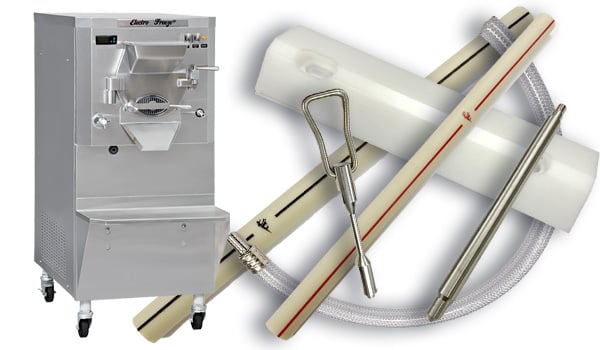
Shaft Seals / Shaft Cup Seals
-
- Keeps the product from leaking into the back of the machine
- Helps the dasher rotate properly
- Replace once a year
Blades
-
- The “lifeblood” of your barrel
- They scrape, aerate, and give the product its proper consistency
- Replace every 1–2 seasons, depending on volume
Mix Transfer Hose
-
- Moves the mix from the bottom of the machine into the freezing cylinder
- Replace every 1–2 months
- Failure here = immediate shutdown
Why Replacing Parts Saves You Money
A full set of wearable parts for the year might cost a few hundred dollars.
But losing one busy evening because of a cracked O‑ring, a bad seal, or a broken hose?
That can cost you far more in:
- Lost sales
- Wasted product
- Emergency service calls
- Customer dissatisfaction
As we like to say:
Don’t worry about what it costs to replace your wearable parts. Worry about what it costs not to.
We even provide:
- Routine maintenance charts you can keep inside your machine
- QR codes for cleaning and maintenance tips
- Hands‑on cleaning demos
— all to help you protect your investment.


